
Many businesses start a website project with the same question: how much should a professional website cost in 2026? The answer depends on the type of website, the level of strategy, the design requirements, the technology behind it and the results you expect it to deliver.
A landing page, a complete business website, an ecommerce store and a custom WordPress platform can all be called websites, but they do not require the same planning, design, development or testing. That is why prices can vary so much from one proposal to another.
This guide explains the main factors behind web design pricing in 2026, what a professional website should include and how to think about your budget before asking for a quote.
When people compare website cost 2026, WordPress website cost, ecommerce website cost or website development cost, the most useful answer is a range connected to scope, quality and long-term value.
Why website prices vary so much
Website pricing is not only about the number of pages. A simple one-page site can be quick to build if the content, visual direction and functionality are clear. A larger website may need strategy, information architecture, custom design, WordPress development, SEO setup, performance work, forms, ecommerce features, integrations and ongoing support.
The final cost also depends on who builds it. A template-based service, a freelancer, a specialized studio and a development team usually offer different levels of strategy, customization, technical quality and long-term support.
That does not mean the most expensive option is always the best one. It means the quote should match the business goal, the complexity of the project and the level of reliability you need from the website after launch.
Common types of websites and estimated cost ranges
The following ranges are broad international references in USD. They are not fixed prices, and they can change depending on the country, currency, provider, scope and timeline of the project.
| Type of website | Best for | Estimated range |
|---|---|---|
| Landing page or one-page website | Campaigns, professionals, focused services or early-stage offers | USD 300 to USD 900+ |
| Small business website | Companies that need a clear online presence with a few key pages | USD 700 to USD 2,500+ |
| Professional WordPress website | Brands that need custom design, SEO setup and a scalable structure | USD 1,500 to USD 6,000+ |
| Ecommerce website | Stores that sell products online with checkout, payments and shipping | USD 2,000 to USD 12,000+ |
| Custom website or platform | Projects with specific workflows, integrations or custom functionality | Custom quote |
Smaller projects can sometimes start below these ranges, especially when the scope is very focused. Larger projects can also go far above them when they involve complex ecommerce, custom software, multiple languages, memberships, automation, advanced integrations or ongoing technical support.
What affects the final cost of a website?
Strategy and planning
A professional website starts before design. It needs to define who the site is for, what the visitor needs to understand, what action they should take and how the structure can support the business goal. Strategy reduces confusion and helps every section work with intention.
Visual design
Custom design takes more time than adapting a generic template, but it can make the website feel more trustworthy, distinctive and aligned with the brand. Design also affects how easy the website is to scan, navigate and use on mobile devices.
Number of pages
A site with home, services, about, portfolio, blog, FAQ and contact pages requires more planning and production than a single landing page. Each page needs layout, copy, responsive behavior, SEO structure and review.
Copywriting and content
Clear content is part of conversion. A website should explain what you offer, who it is for, why it matters and how to take the next step. If the project includes content strategy, copywriting, image selection or content upload, that will influence the quote.
WordPress development
WordPress can be used in many ways. A simple theme setup is not the same as a carefully built WordPress website with reusable blocks, clean structure, custom fields, optimized plugins, proper forms, security basics and a panel that is easy to manage.
Ecommerce features
An ecommerce website usually requires product structure, categories, cart, checkout, payment methods, shipping rules, tax settings, transactional emails, privacy and security considerations. These elements add more configuration and testing.
SEO setup
SEO is not something that should be added at the end. Page titles, meta descriptions, heading hierarchy, internal links, image alt text, schema, sitemap, canonical URLs and indexation settings should be considered from the beginning.
Speed and performance optimization
A website that loads slowly can lose visitors before they even read the first section. Performance work may include image optimization, caching, font loading, code cleanup, plugin review and mobile testing.
Integrations
Forms, newsletters, CRMs, booking systems, payment gateways, analytics, automation tools and custom APIs can all affect development time. Each integration should be configured and tested carefully.
Maintenance and support
A website needs updates, backups, security checks and occasional improvements. Some projects include post-launch support, while others quote maintenance as a separate monthly service.
Cheap website vs professional website
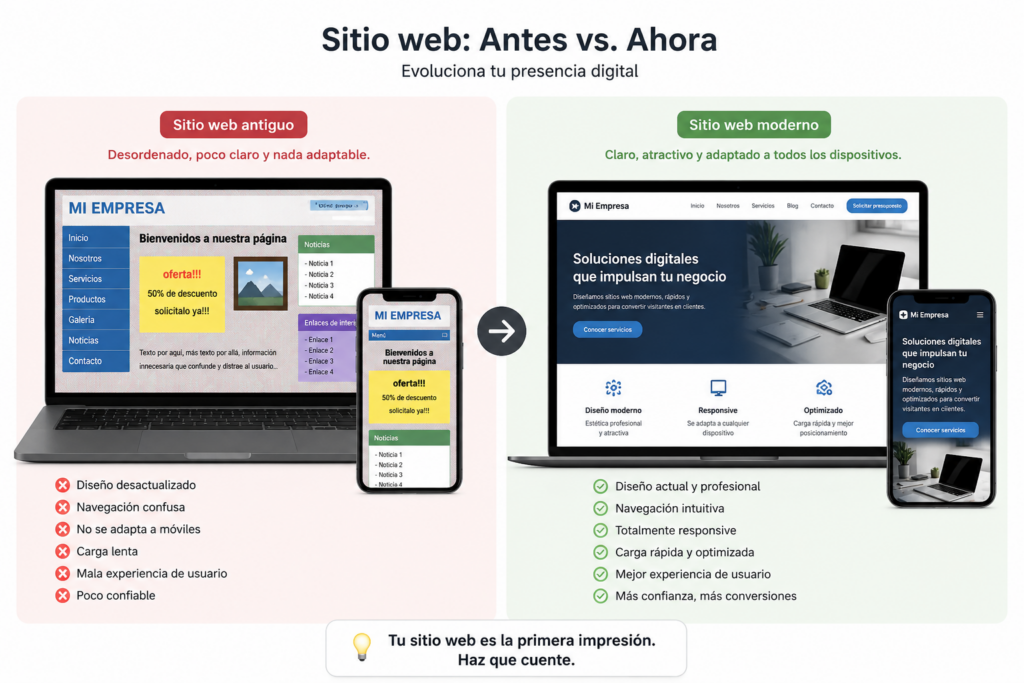
A cheap website can feel like a smart decision at first. But it can become expensive later if it loads slowly, does not convert, is hard to update, is not optimized for Google or does not communicate trust.
| Cheap website | Professional website |
|---|---|
| Built quickly without a clear strategy | Planned around business goals and user needs |
| Often based on a generic template | Designed to support the brand and the message |
| May be difficult to maintain | Structured to be updated and improved over time |
| Often skips SEO basics | Includes an initial technical and content SEO structure |
| Can be slow or fragile | Prioritizes performance, stability and scalability |
The real difference is not only visual. A professional website should help visitors understand the offer, trust the brand and take action with less friction.
How to know what budget you need
Before asking for a quote, it helps to define what your website needs to achieve. A clear brief makes pricing more accurate and prevents misunderstandings later.
- What type of business or project do you have?
- Who is the website for?
- Do you need a landing page, a business website, a blog, an ecommerce store or a custom platform?
- Do you already have content, images, branding, domain and hosting?
- Do you need online payments, bookings, forms, CRM, automations or integrations?
- Do you need SEO, performance optimization or ongoing maintenance?
- What should happen when a visitor reaches the website?
If the website needs to generate inquiries, sell products, support search visibility or become part of a larger digital system, it is worth planning it as a business tool rather than a static online brochure.
Final thoughts
If you are planning a new website in 2026, the best starting point is not only asking how much it costs, but understanding what your website needs to achieve for your business.
A professional website should look good, load quickly, communicate clearly, be easy to maintain and support your long-term digital presence.
Need help planning your website?
At Estudio Calliope, we design strategic WordPress websites, ecommerce experiences and digital tools built to be fast, clear and ready to grow.